Understanding the Sarenne Trail
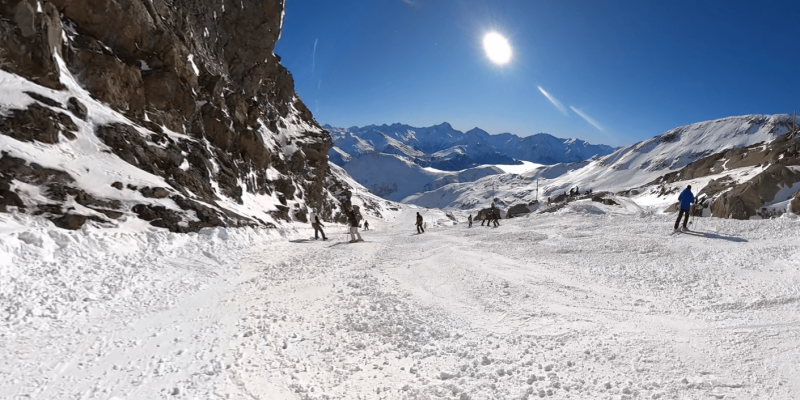
The Sarenne run is more than just a simple descent: it’s a true alpine adventure that begins at the summit of Pic Blanc, at an elevation of 3,330 meters. This legendary black run winds its way through a variety of mountain landscapes, offering exceptional panoramic views of the Meije, Écrins, and Mont Blanc massifs.
Unlike the other runs in the ski area, La Sarenne takes you far from the hustle and bustle of the main runs, into a wild and unspoiled setting. The run consists of several distinct sections, each with its own characteristics and technical challenges.
Technical Specifications
- Length: exactly 16 kilometers
- Elevation gain: 1,800 meters
- Difficulty: Black (expert only)
- Average duration: 45 minutes to 1 hour and 15 minutes
- Orientation: Northeast (watch out for morning ice)
Physical and Technical Training
The exceptional length of the Sarenne requires peak physical condition. Unlike a typical 2-3-kilometer run, you’ll need to maintain your focus and technique over a distance equivalent to 8-10 standard runs strung together.
“La Sarenne doesn’t forgive mistakes. It’s a course that rewards preparation and punishes improvisation.” — Jean-Claude Killy, Olympic champion
Recommended Workout
Start preparing at least 2 weeks before your attempt with a specific training program:
- Strengthening the quadriceps and calves (squats, lunges, stair climbs)
- Cardiovascular endurance training (running, cycling, swimming)
- Improving Balance (Proprioception, Yoga, Pilates)
- Specific warm-up on long red runs in the days leading up to the event
Equipment and Safety
The relative isolation of certain sections of the Sarenne River requires appropriate and comprehensive equipment.
Equipment
- Ski helmet (strongly recommended)
- Recommended back protector
- Skis in perfect condition (recently waxed—a must)
- A fully charged cell phone with emergency numbers
- Energy snack and water
Weather can change quickly in the high mountains. Be sure to check the conditions before setting out, and don’t hesitate to postpone your trip if conditions aren’t ideal.