When ski slopes become pastures: an age-old tradition in the service of ecology
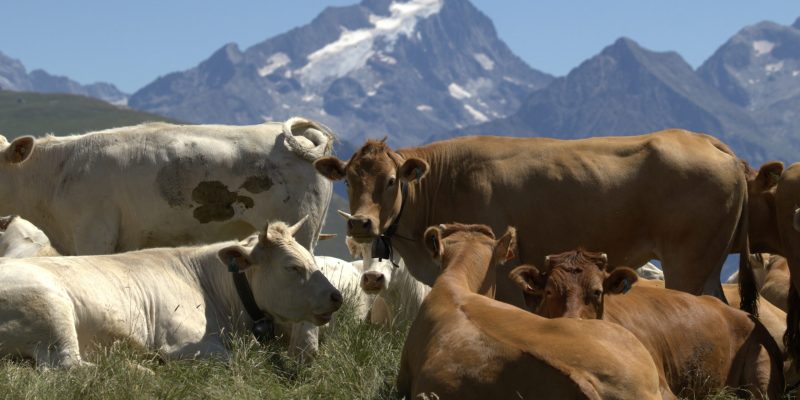
Every summer, once the last skiers have gone back down and the snow has melted, around 2,000 sheep and 280 cattle invade the Alpe d’Huez ski area, watched over by two shepherds Environment and CSR – Alpe d’Huez – Official Website – Winter. These thousands of hooves treading next winter’s runs are not there by chance: grazing is an agricultural practice that is necessary for ecological continuity Environment and CSR – Alpe d’Huez – Official Website – Winter. While you’re at the beach, these sheep are doing a job that dozens of lawnmowers could never match. They naturally maintain the alpine pastures, stop scrub from taking over the runs and preserve the open landscapes that make the mountains so beautiful. These pastoral areas are protected by the Association Foncière Pastorale Autorisée (AFPA) to avoid disturbance from tourism Environment and CSR – Alpe d’Huez – Official Website – Winter.
35m³ of rubbish collected: the big end-of-season clean-up
But ecology in Alpe d’Huez is also about concrete, collective action. At the end of every season, volunteers head out onto the ski area armed with gloves and bags to pick up all the litter that has built up. In total, around 35m³ of rubbish is collected! This “Resort Clean-up” operation is open to everyone Environment and CSR – Alpe d’Huez – Official Website – Winter. 35 cubic metres is the equivalent of a whole lorry-load of sweet wrappers, cigarette butts and packaging abandoned on the slopes! A cigarette butt takes 730 days to disappear, a piece of chewing gum 1,825 days and a drinks can 3,650 days Environment and CSR – Alpe d’Huez – Official Website – Winter. Imagine the impact if nobody picked it up: within 10 years, it would be a real open-air rubbish dump.
Piste bashers running on vegetable oil: the silent revolution
Grooming the slopes accounts for 68% of the resort’s CO2 emissions. Faced with this, Alpe d’Huez has taken the bull by the horns: all the piste bashers in the ski area now run on HVO (hydrotreated vegetable oil). This investment aims to cut the CO2 emissions generated by the piste bashers by 93% Environment and CSR – Alpe d’Huez – Official Website – Winter! 93% – that’s colossal. But it doesn’t stop there: the piste bashers are fitted with a Snowsat system, a touchscreen GPS that optimises grooming time and routes and limits snowmaking Environment and CSR – Alpe d’Huez – Official Website – Winter. The result: an average reduction of 4% a year for vehicles, and of 20% for tracked vehicles and snowmobiles Environment and CSR – Alpe d’Huez – Official Website – Winter. The drivers are even trained in eco-driving, as if they were earning a green driving licence!
1,528 protected species: the Apollo butterfly and the carnivorous plant
The ski area is home to more than 1,528 different species Environment and CSR – Alpe d’Huez – Official Website – Winter. Among them are some rare treasures: the Apollo butterfly, which lives at altitude and feeds on stonecrops and houseleeks, measures around 35 to 40 mm Environment and CSR – Alpe d’Huez – Official Website – Winter. But the star of the show is no doubt the sundew, a carnivorous plant originally from Australia that is found in the Rif-Nel peat bogs Environment and CSR – Alpe d’Huez – Official Website – Winter! To protect these species, the resort has even set up flower greenhouses at more than 1,500 metres above sea level, with 2,000 perennials and 12,000 annuals Environment and CSR – Alpe d’Huez – Official Website – Winter. And when it comes to looking after them, it’s zero pesticides: hoeing, brushing, weeding, sweeping or even insects are preferred Environment and CSR – Alpe d’Huez – Official Website – Winter. Nature working for nature!
Wetlands: the magic sponges of the mountains
Wetlands act as “buffers”: they retain the water that seeps into the ground, limit droughts, replenish groundwater and regulate flooding Environment and CSR – Alpe d’Huez – Official Website – Winter. In Alpe d’Huez, 5 sensitive areas are listed and protected: 3 type I zones (Les Grenouilles, the Plan des Cavalles and the Roche-Noire plateau) and 2 type II zones (the south-facing slopes of the Romanche and the Grandes Rousses massif), plus 2 biodiversity reservoirs (Sarenne and Grande Sure) Environment and CSR – Alpe d’Huez – Official Website – Winter. Around these areas, building, holding events and even camping are strictly forbidden. They are the mountain’s living sanctuaries, where water, plants and animals find refuge. With the sheep mowing the grass naturally, the volunteers cleaning up, the piste bashers running on vegetable oil and the protected wetlands, Alpe d’Huez proves that ecology and skiing can go hand in hand!